Monday, January 30, 2006

Simulation in the Ascendant...

here's some questions that the writer sent
can an observer be a participant?
have i seen too much?
does it count if it doesn't touch?
if the view is all i can ascertain
pure understanding is out of range
if i make that call
why can't i make that change?
i'm an ex-spectator
can't you see?
i'm an ex-spectator
never let my never let my vision
get in the way of me

—Fugazi, "Ex-spectator"
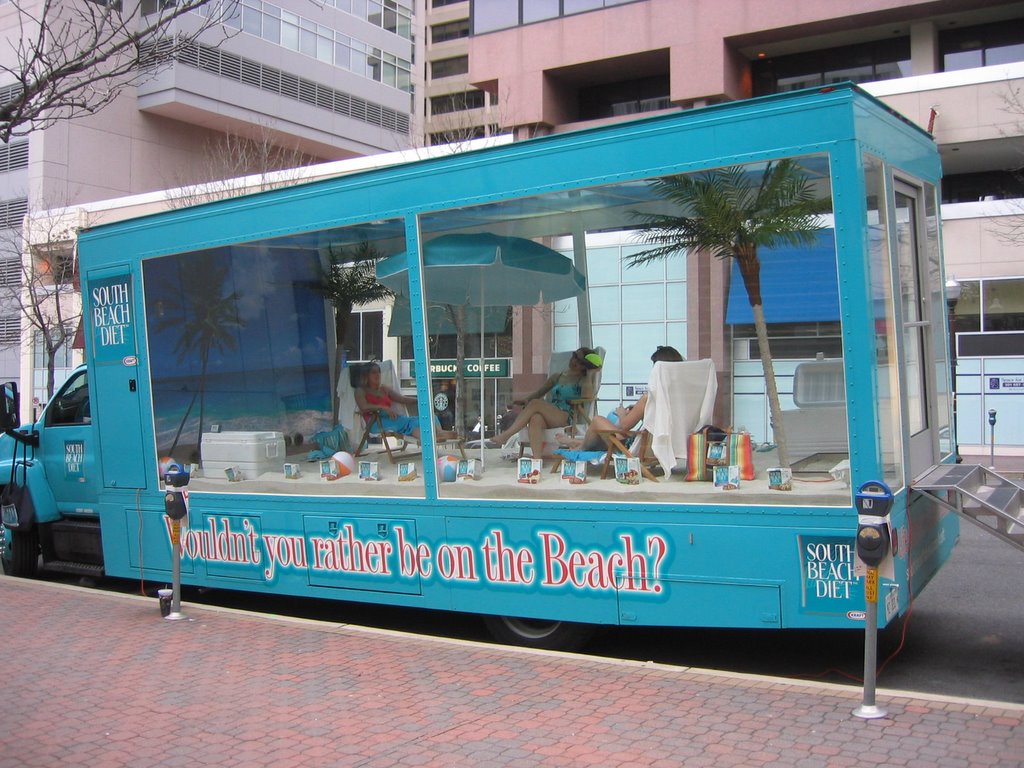
I took these pix while cruising around the DC Metro area on my fixie. The scenes they convey share a common theme—that of simulation—and the fact that I came upon them all within a two week period seemed a bit uncanny, to the point of prompting this post.

In the 60s, French social critic Guy Debord and the Situationists maintained that modern society had reached a point where people no longer were active players in their own lives. Working conditions and economic and political systems, according to Debord, had conspired to turn everything into sterile commodity, debasing all human interaction to the level of monetary transaction. Not out of spite or malice (after all, there's no evidence that market forces delight in their evil side-effects), but through a kind of tranquilized consent on the part of the masses, who either willingly or unknowingly gave up their own real world in favor of one fabricated for (and by) them.
The resultant cultural black hole created a society of mere spectators with an affinity more for the image than the thing it represents (think of the TV viewer who prefers watching the "lives" of characters on the other side of the screen to developing his own social relationships on this side, or the child "snowboarding" down the pixelated slopes of Mount Xbox). The culmination, what Debord referred to as the spectacle, is:
    "...not a collection of images, but a social relation among people, mediated by images. The spectacle presents itself as something enormously positive, indisputable and inaccessible. It says nothing more than that which appears is good, that which is good appears. The attitude which it demands in principle is passive acceptance which in fact it already obtained by its manner of appearing without reply, by its monopoly of appearance."
In their illuminating essay, Debord and the Postmodern Turn: New Stages of the Spectacle, Steven Best and Douglas Kellner write:
    "For Debord, the spectacle is a tool of pacification and depoliticization; it is a 'permanent opium war' which stupefies social subjects and distracts them from the most urgent task of real life—recovering the full range of their human powers through revolutionary change. The concept of the spectacle is integrally connected in Debord's formulation to the concept of separation, for in passively consuming spectacles, one is separated from actively producing one's life."
Deep stuff, to be sure, but manifestations, or more precisely, symptoms, of the spectacle at large are all around us every day, from the subtle and innocuous to the blatant and insulting.

The first pic above was shot on a street in the Rosslyn area of Arlington, Virginia. It's a self-contained beach scene complete with "real" sunbathers, captioned by a puerile play on words in the interests of marketing packaged diet food to those unhappy with their largely self-inflicted body shapes. The women (no men) inside the terrarium, while not obese, were far from toned—the triumph of form over function, of appearance over application.

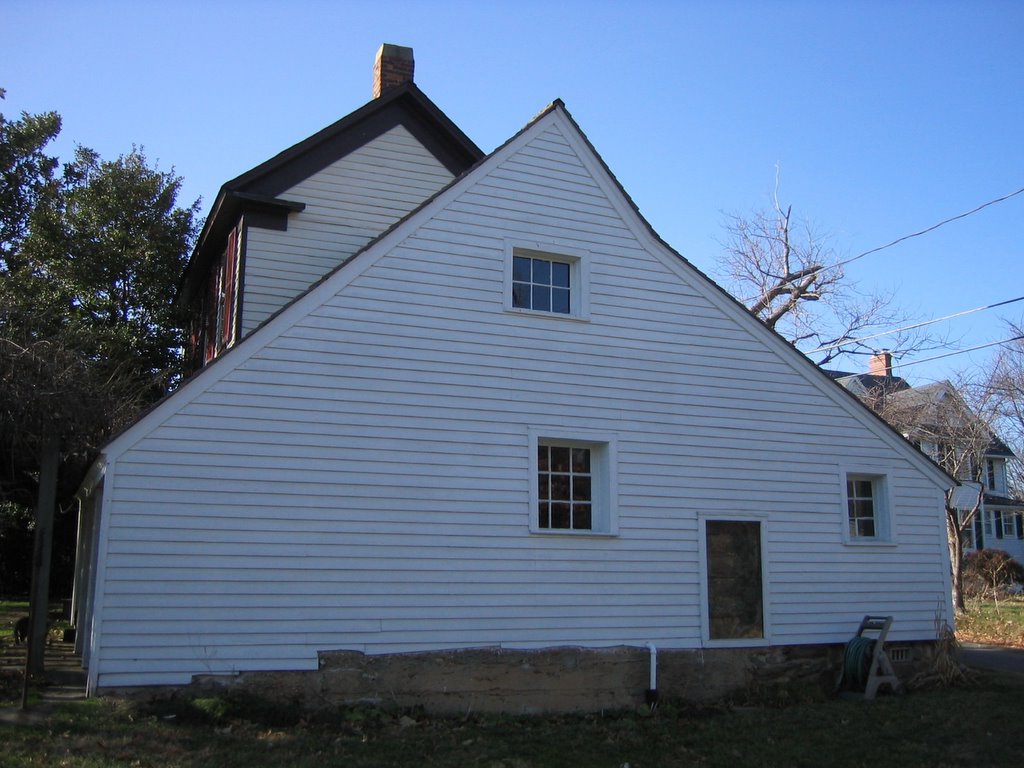
The second pic is a view from the left side of the historic John Ball House near Carlin Springs Road in Arlington. What appears to be a low window is actually a display case of sorts, offering a tiny cutaway view of what the original house looked like in the 1770s, before the siding was applied and it became a museum piece. A plaque on the lawn commemorates the aging building, presumably for its luck in surviving the great teardown that ensued all around it in the coming centuries to make room for modern housing units.

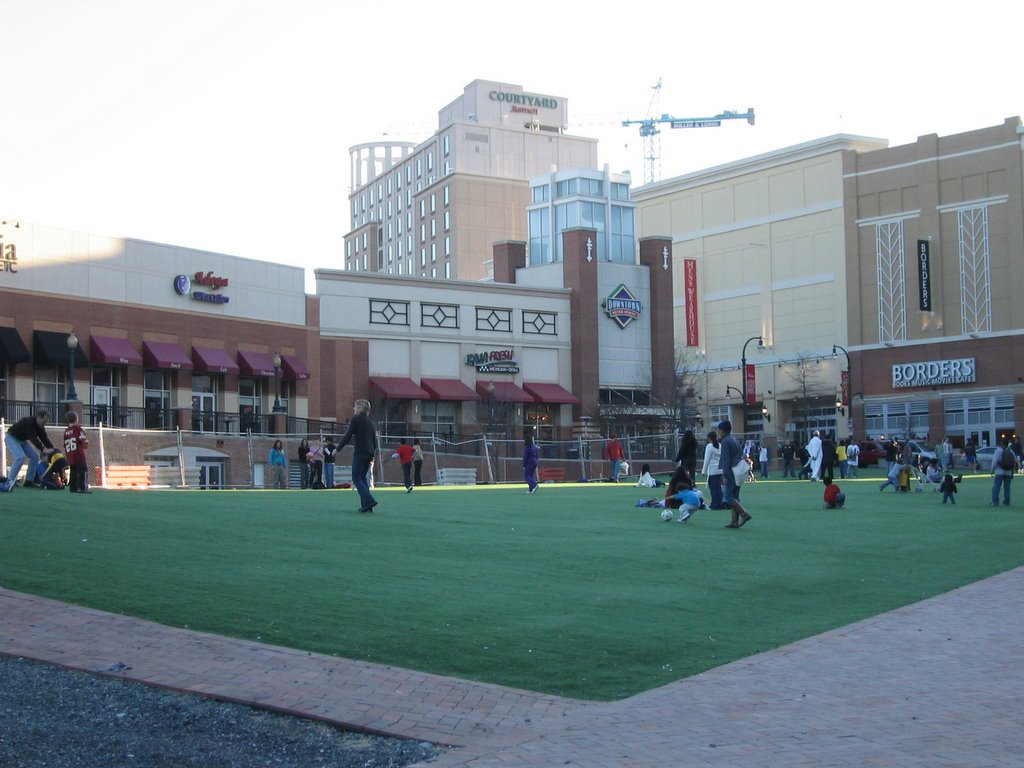
The last pic is of a courtyard area at the bustling Town Center in Silver Spring, Maryland. The happy people really seem to be enjoying the pleasures offered by the durable and care-free foundation of artificial turf beneath their feet as they work off the post-adrenaline euphoria that sets in after a productive day of shopping. The only thing missing? A set of plastic animal lawn ornaments. Beautiful.

In November of 1994, as the sun drifted from the sky over the Auvergne region of France, Debord, whose work had been influential in the great popular uprising in Paris in May of '68, found his own way out of the spectacle by firing a single bullet into his heart. Reportedly despondent over an alcohol-related illness called peripheral neuropathy, he died alone in his farmhouse in Champot. He was 62 years old.

Wednesday, January 25, 2006

The Punk Meets the Godfather...*

What we have here is Dogfish Head's latest limited edition IPA offering, Burton Baton. It's one baton you won't want to pass on.

A blend of Burton style (oak-aged) English strong ale with DfH's own 90 Minute IPA, this is one smooooth ale. The oak contribution is subtle compared to similar offerings, for example, Old Dominion's oak-aged Millenium or Great Divide's Oak Aged Yeti Imperial Stout (owing, perhaps, to the fact that this is a 50/50 blend), but it's definately there in a gentle hint of whiskey that lingers pleasantly on the palate.

Relatively light in color, sort of sweet and slightly spicy, with a faint vanilla presence. Not as hoppy as one would expect from an Imperial IPA, but altogether quite enjoyable for an ambitiously conceived ale. Pricey, so sip it (price here is in part a function of limited resources: a batch of specialty ale takes up a tank that would normally be devoted to a sure and quick seller, and for a longer time). Considered a rare and limited release—distributors received only 40 cases apiece—try it before it's gone. Oh, and as the label says, "...this beer ages with the best of 'em", so feel free to stash one for a year in a cool spot in the basement, if you can hold out that long.

Vital stats:
  • 10% ABV

  • 80 IBU
*With apologies to Pete Townsend. The Godfather reference is to both Sam Calagione, president and founder of Dogfish Head, and to the "old" style Burton ale. The punk reference is to Jon Langford, former Mekons member turned artist, who created the artwork for this beer's label, and to the "young" 90 Minute IPA.

Monday, January 23, 2006

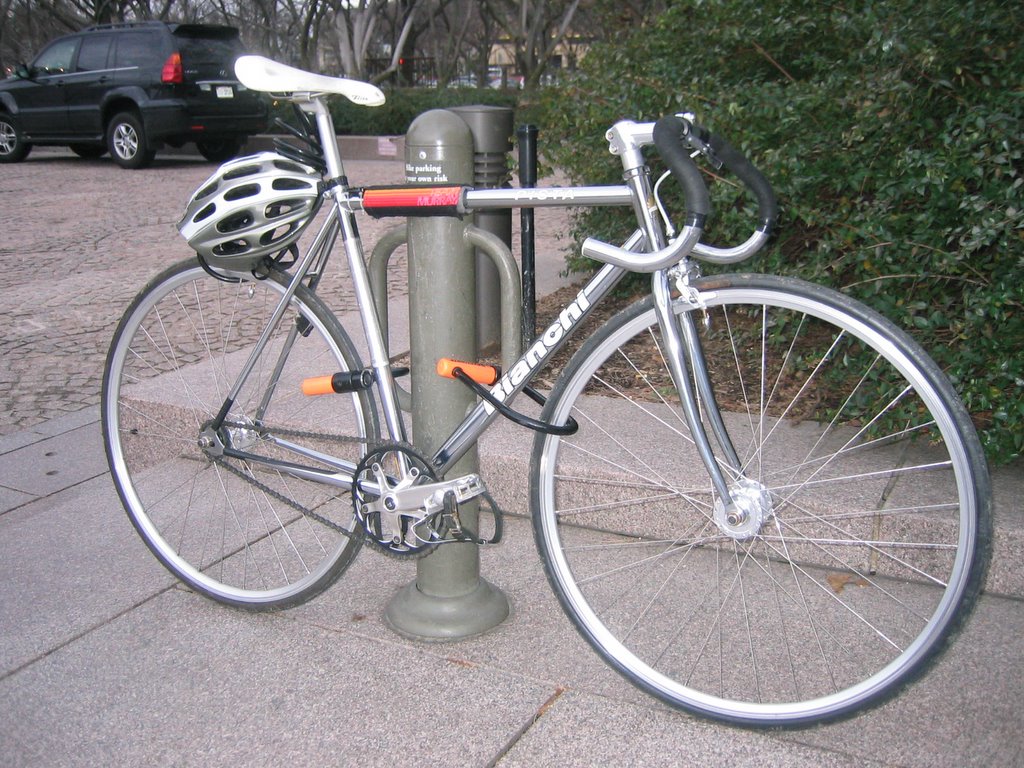
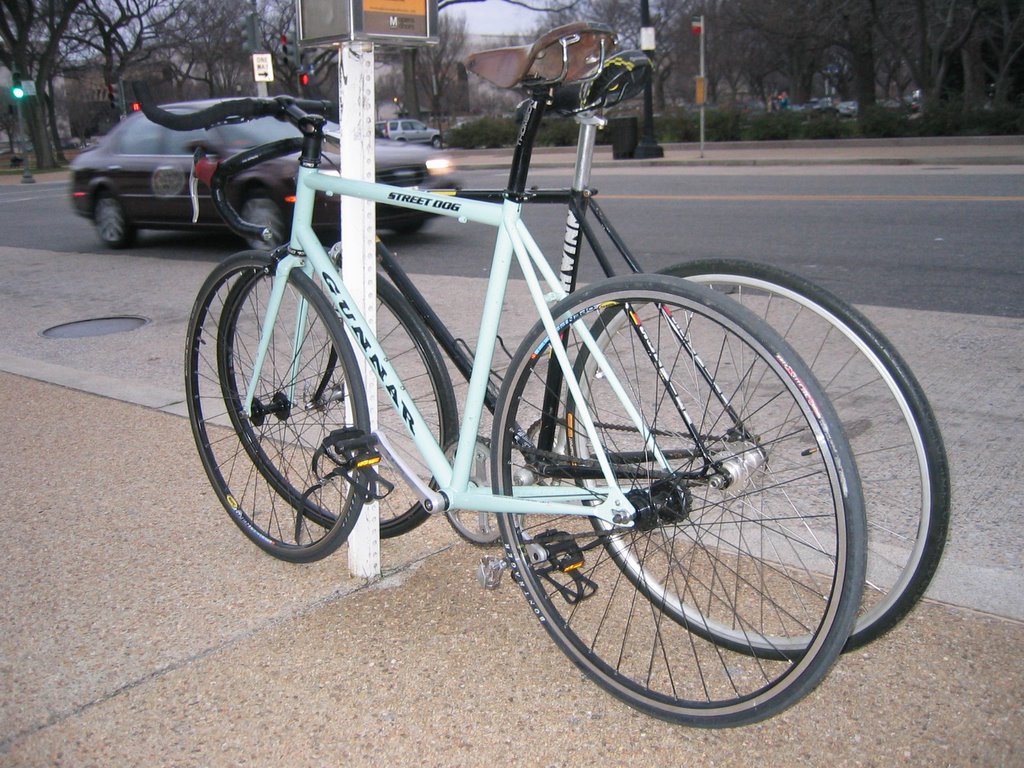
Fixed Gear Fauna...

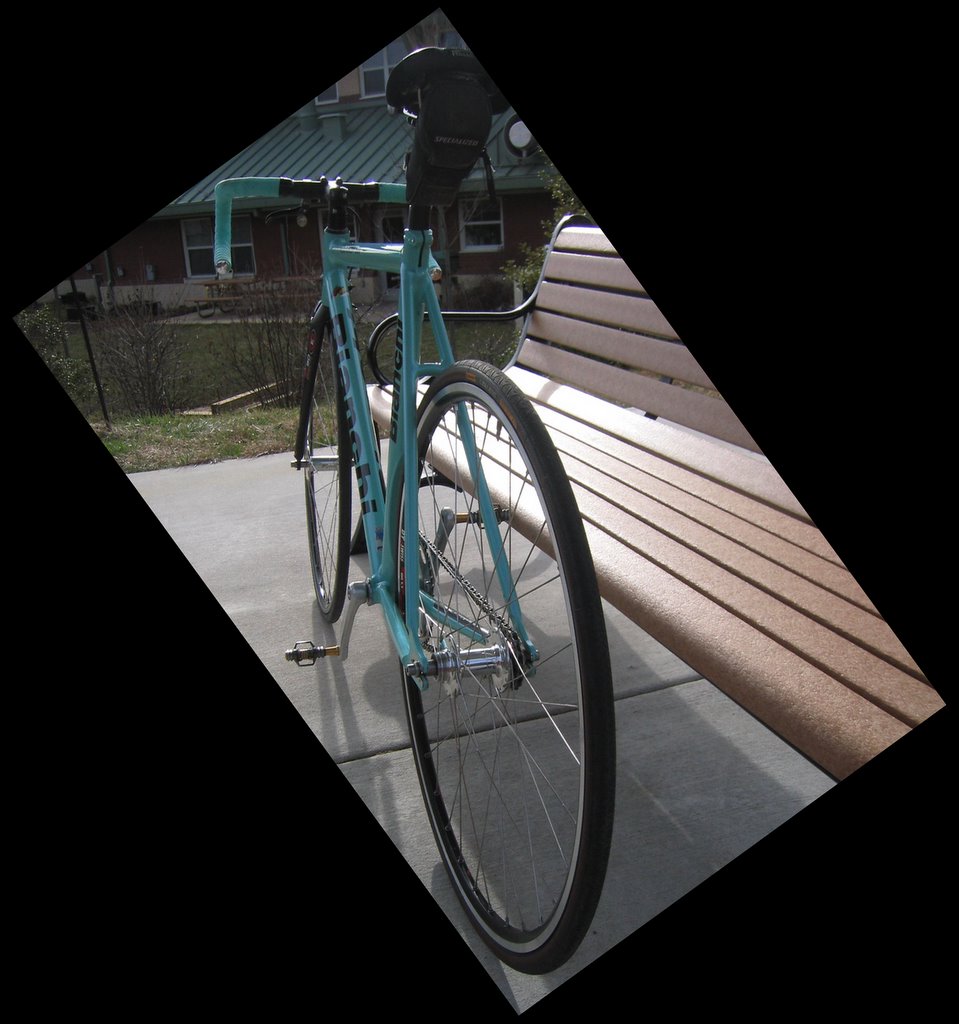
Outside the National Gallery of Art, West Building, Washington, DC

Outside the National Gallery of Art, East Building, Washington, DC

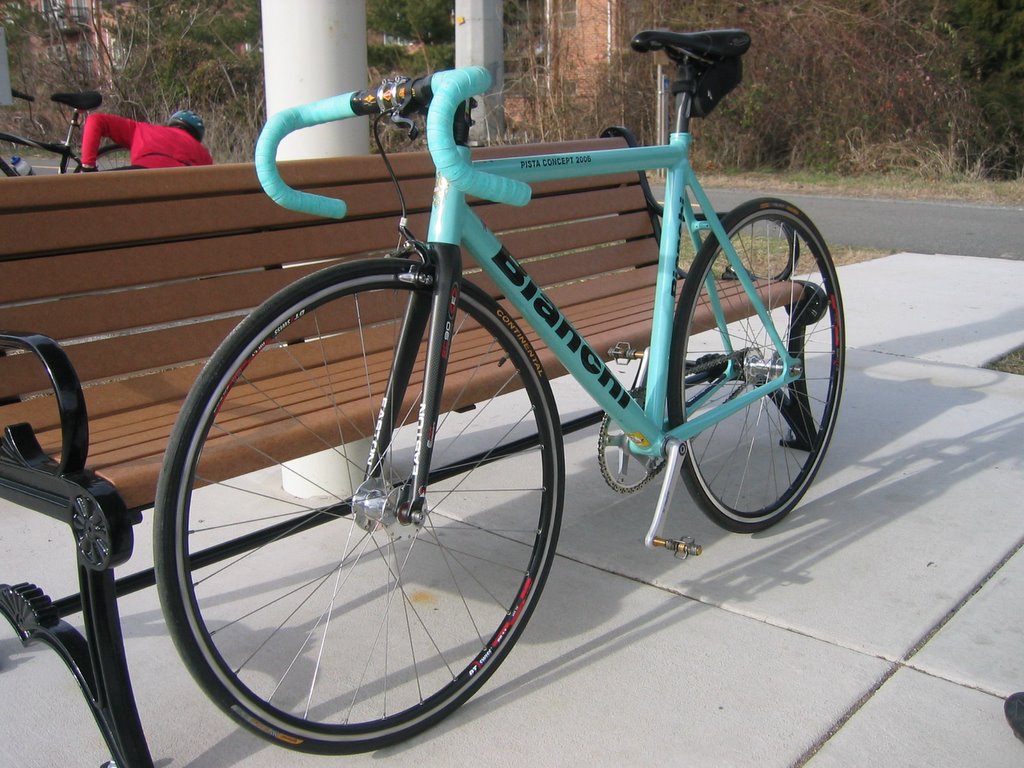
Pista de Résistance, Falls Church, Virginia

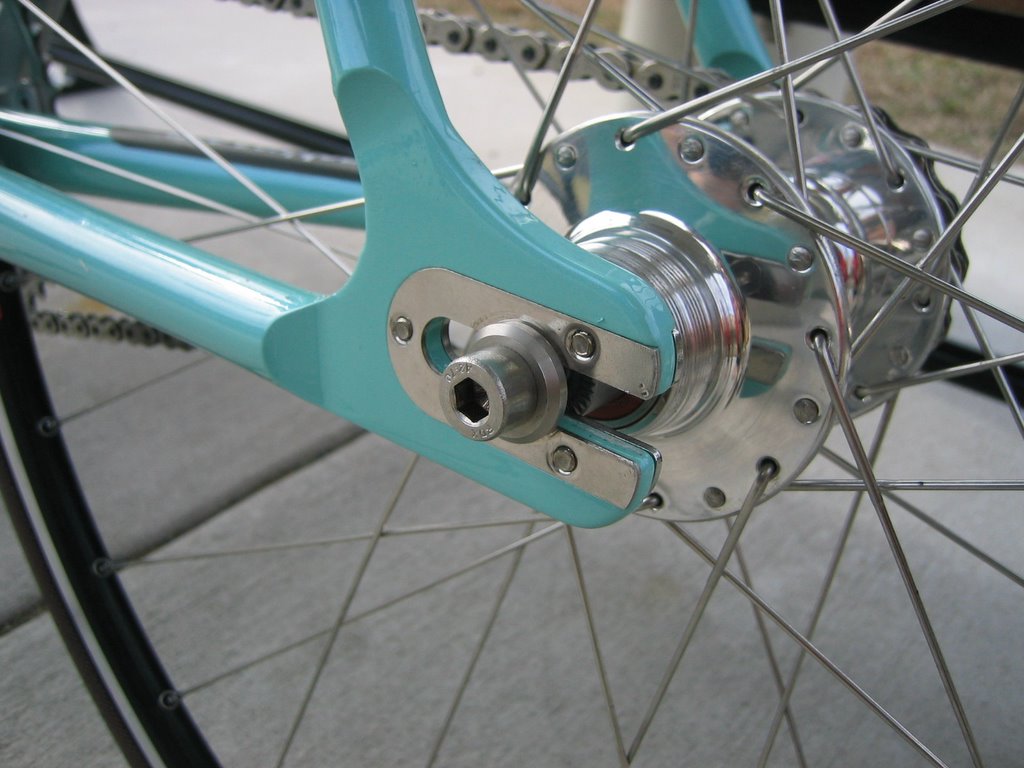
Pista de Résistance - Dropout Detail w/ Phil Hub, Falls Church, Virginia

Pista de Résistance - Money Shot, Falls Church, Virginia

Coffee Break, Portland, Maine

Monday, January 16, 2006

No Bike Left Behind?...

Pedaling the streets of DC and its suburbs, I'm always struck by the number of bikes that appear to be abandoned, shackled to bike racks, signposts, trashcans, fences, parking meters, etc., then left to the elements like so many unwanted mongrels. It's one of those unyielding mysteries that refuses all manner of contemplation and logic.

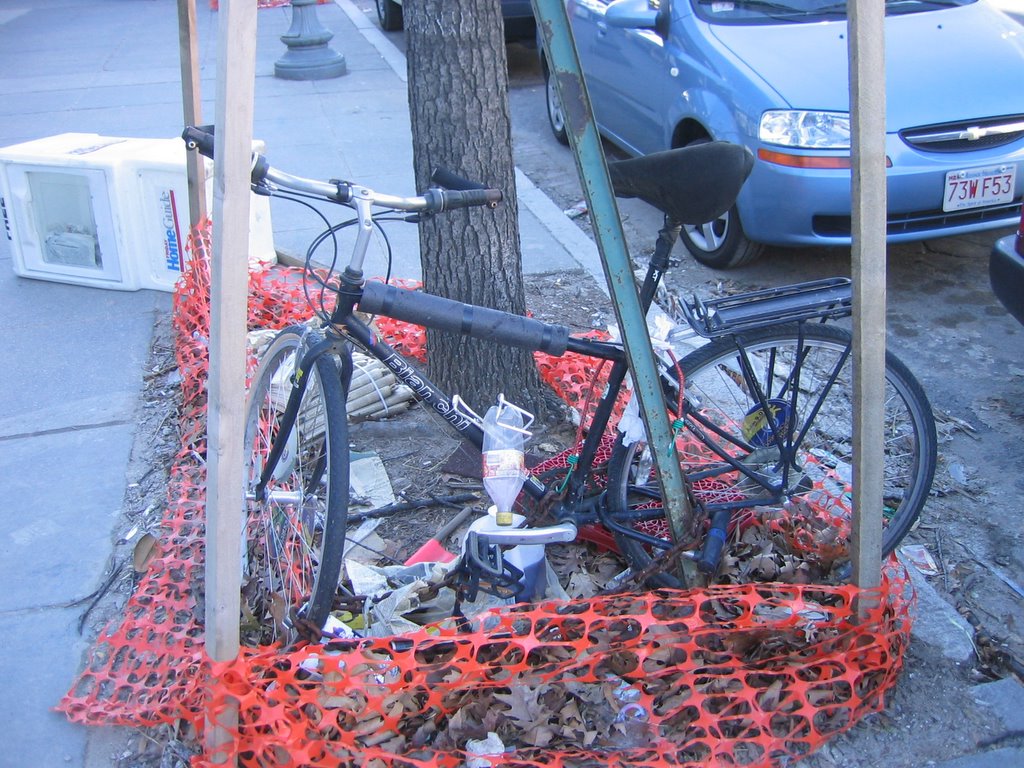
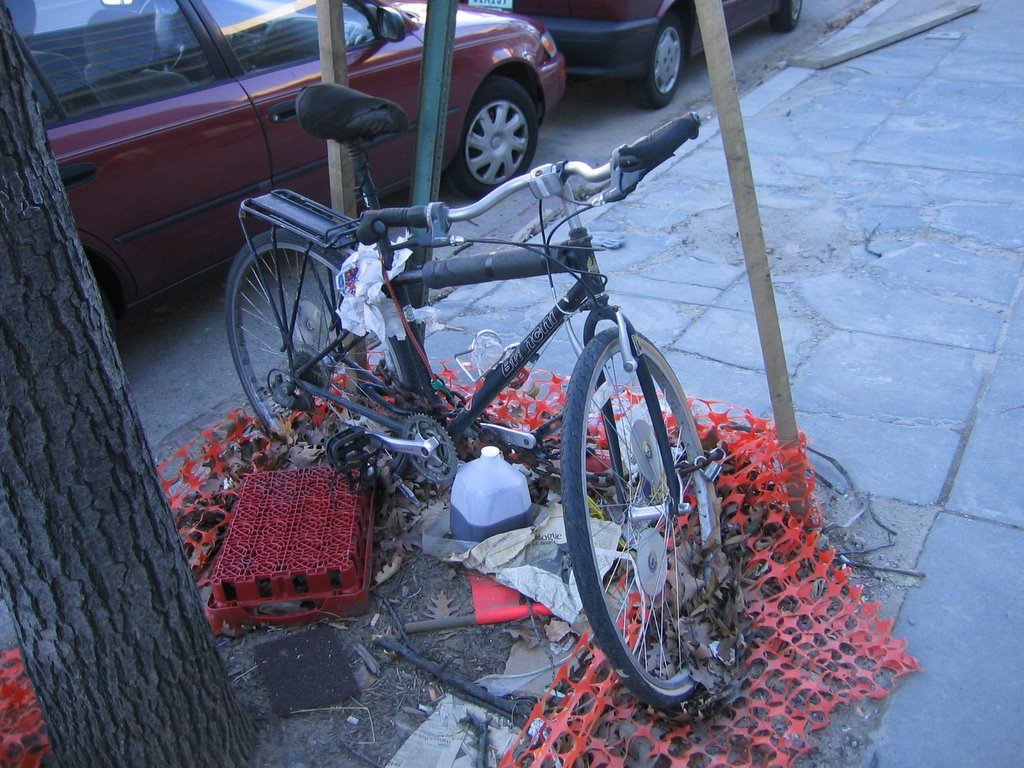
Take the Bianchi (Bergamo? Avenue? Boardwalk?) pictured above. It's parked in DC about midway between the L'Enfant Plaza Metro Station and the US Department of Education (on whose hallowed grounds stand several colorful, cartoonish schoolhouse modules, each bedecked with a plastic sign proudly proclaiming in mock children's handwriting "No Child Left Behind," and each as empty inside as the policy it represents; but I digress). Not a bad little commuter, by any definition. Sure, it's not a high-end frame, doesn't bear the boastful Reparto Corse descriptor, was, in fact, constructed in Taiwan, but it is made of quality steel tubing, is spec'd with a parts mix wholly adequate to its purpose, and can lay claim to Italian heritage and over a century of technical refinement from a highly esteemed framemaker. It's even got a rear rack, a saddle cover, and, for those who like them, bar ends. In short, it's solid, reliable, respectable, utilitarian, and not bad-looking, as townies go.

Now, notice the pains taken by the owner to secure the bike. First, there's the ubiquitous u-lock deftly looped around the rear wheel and left chainstay and hugging a signpost of admittedly dubious permanence. Then there's the real kicker: five pounds of steel chain that snakes through the front wheel, front triangle, rear triangle, and rear wheel, encircles said signpost, and is joined by a Master padlock. It's clear from the evidence that the owner expected to return to pick up the bike and, except for the poor choice of mooring, took appropriate measures to guarantee its security in the meantime.

But there's no question that it's been abandoned somewhere along the way. There's the tell-tale rust on both chains, the greaseless gear cluster, the saddle cover that the bike seems to be sloughing off like dead skin, the eclectic bric-a-brac (oil-filled milk jug, mouldering newspaper, cafeteria glass rack, construction flag) assembled around the wheels like oblations to a decaying idol, the leaves tucked under the tires by wayward winds, the temporary fencing enclosing the whole spectacle like crime scene tape (the crimes being abandonment and neglect).

What happened with this bike? What set of circumstances led to this scenario? How many of these exhibits are stationed around the cities, the suburbs, each linked invisibly to the next by a common bond of neglect? Are they reluctant symbols of a disposable world? Artworks of entropy, maybe? 3-D graffiti of sorts, effaced only by the occasional and seemingly random application of boltcutters? Or are they simply the embodiments of life's vicissitudes, the unfortunate victims of unforseen factors in the lives of their owners, each with a story all its own?

In Arlington, outside the GMU School of Law near Balston, a steel road bike kneels on its fork legs in the cold glare of a streetlamp, not twenty feet from the bike lane, dreaming of motion past. Forlorn and homeless, stripped of its modest possessions, ignored by passersby and police alike, it's been there for almost a year now, quietly succumbing to a virus of rust. No cure in sight.

I remember as a young child seeing abandoned bikes in varying states of disrepair, littering the concourses of Metro stations and the like, and feeling a profound sense of sadness and pity for these orphans, as if they were sentient creatures. But maybe Nietzsche was right (although on a different subject) when he said there's too little compassion in this world to waste it on imaginary beings. I guess the real issue here is that most of these bikes aren't removed until long after they've passed the point of being salvageable. Which means they end up interred in a landfill instead of under the ass of a needy cyclist.

And that's a shame.

Saturday, January 07, 2006

S(tockholm)S(weden)WC 2006...

Break out your bike shipping crate, because it's about as official as it's going to get. The chaps from Surly, having won the (2 person?) derby at last year's Single Speed World Championship in PA, have decided—after a hellishly exhaustive, comprehensive, and highly scientific review of some 16 submitted destinations—that Stockholm, Sweden will host this year's SSWC event. Read more about it here.

The only downside? "One speed" in Swedish is en fart.

Wednesday, January 04, 2006

Paean to the Power of the Pedal...

"Everything that was directly lived has moved away into a representation."

— Guy DeBord, Separation Perfected


I love my bikes for a plethora—more precisely, a shitpot full—of reasons. Dispensing with the obvious, though no less relevent, qualities that evoke such feelings of affection, e.g., the greenness factor, the health benefits, the cost savings, etc., I think it all comes down to this: the bicycle is the ultimate social vehicle.

On a bicycle, open to the air, free of the compartmentalized, sterile, "comfortable" cabin of the automobile, you come into close contact with other people by necessity. Through the magic of unmediated proximity, pedestrians become that which they are: human beings, like you, with a right to the open spaces, instead of obstacles to fast, easy passage or, worse yet, moving, unpredictable liabilities that command a sort of diminished respect that arises only as the automobile driver approaches the point of collision. Commute in a car, your mind is on your job; commute on a bike, your mind is on the ride—the here and now, mindfulness, to borrow a term from Buddhism.

On a bicycle, you're free to engage whomever is within earshot, to eavesdrop as it were on anything and everything within audible range, to notice, to see, to be aware, to contribute to the social fabric as a necessary thread in the social fabric, to move within the environment instead of merely through it, a dynamic actor in the daily drama of life instead of a detached tourist or passive spectator, isolated and inert like a specimen under tempered glass. Uncontained by the chaotic servitude of traffic patterns and "rush" hours, you're free to move and, more importantly, to stop when and where you please for whatever reasons obtain. The community matters to you precisely because you are the community.

In this age of the triumph of the simulated over the experiential*, the bicycle offers a tangible antidote to the banal and the scripted, one that lets the rider be, in both a physical and metaphysical sense. Riding a bike is real: the heart pumps, the legs churn, the lungs burn, the body travels through time and space, the eyes convey the local world in three dimensions, the mind roams-thinks-vacillates-commits, the ride, the trip, the journey, the expedition is worth it, not just because it is the opposite of that other, but because it is, unquestionably, an authentic experience in an increasingly unreal and prefabricated world.

The beauty and simplicity of life unfolds, free and unsponsored, beyond the sloping contours of a handlebar. The bicycle offers us an escape, not from reality, but into it.


*An age in which, for example, people "live" vicariously through television, an utterly and deliberately contrived domain where so-called reality shows seek to compel viewers to develop distal attachments to the flashing, empty, one-dimensional pixels on the screen as if there could be any value, any meaning in such "relationships," where real crimes are mirrored in the plagiaristic panopticon of the screenwriter's pen to produce police drama plots "ripped from today's headlines," where the illicit and ethically bankrupt subterfuge of intelligence organizations is glorified and sanctified by lantern-jawed actors as heroic "necessary evils," where the bombing of foreign cities from infinite altitudes is transmitted in "real-time" by major news networks (and later digitized) as all-too-real scenes in a video game; in short, an age in which the glass teat, as Harlan Ellison calls it, does its plutocratic duty not so much to control our minds as to render them impotent and asocial, all in the name of eternal consumption. The bicycle is one of the few inventions that can throw up the finger in the leering face of the status quo, rather than serving it like so many other products whose goal is strictly to fatten the wallet of the manufacturer while lulling the buyer into a phony state of happiness, satisfaction, and tranquility, one that must be continually renewed with fresh purchases, one that draws its strength from isolation or, at best, a simulated sense of community.

Sunday, January 01, 2006

Radial Redux...

Three's a Crowd

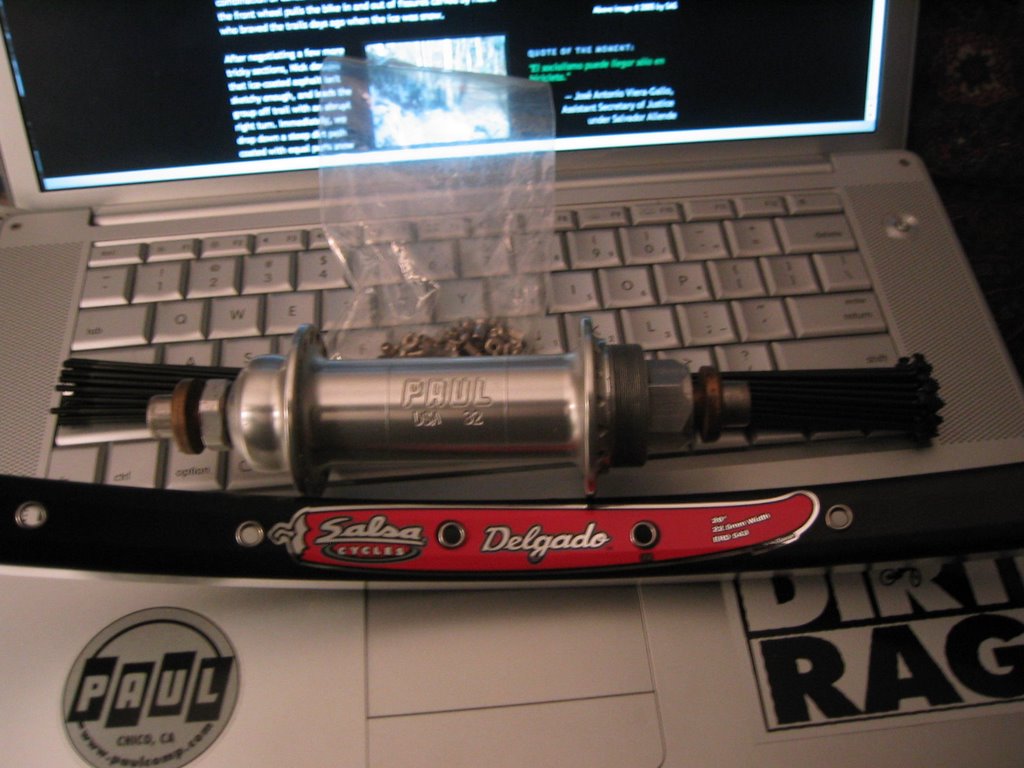
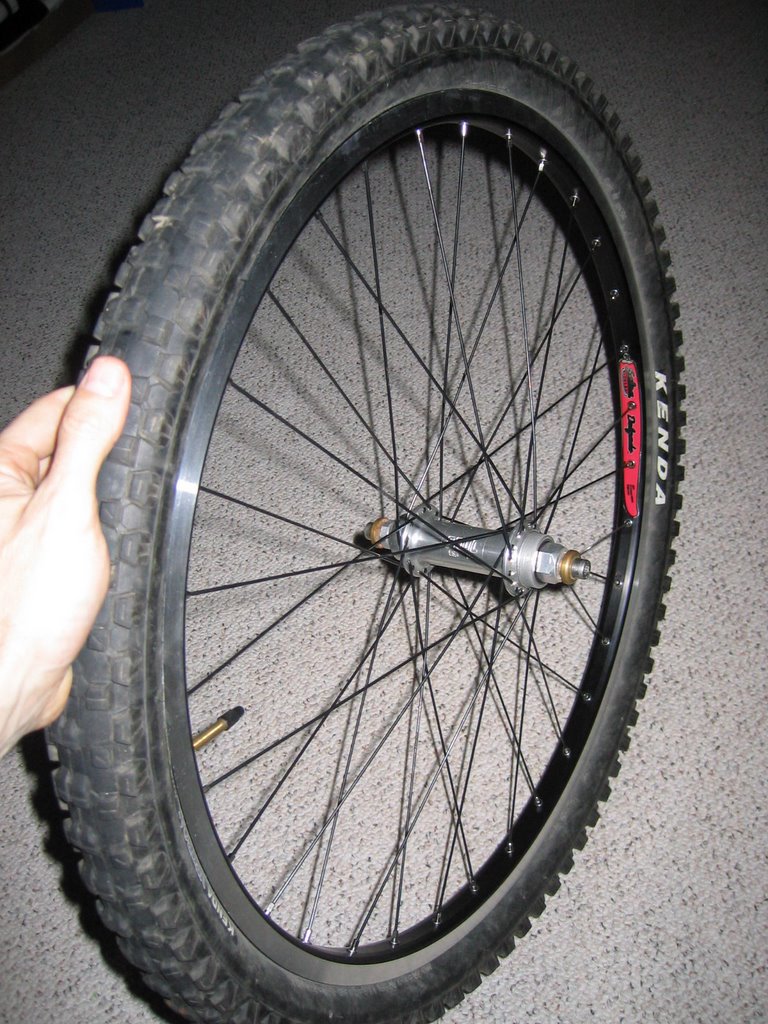
So, last Thursday evening I built my tenth wheel, necessitated by a sidewall blowout that occured last fall on a pretty casual MTB ride. Since I had built a back-up wheel with a Surly hub (nice and rugged for the winter conditions) months ago, the sweet, light, and oh-so-smooth Paul WORD hub from the damaged wheel sat around all lonesome for quite a while until I felt it was time.

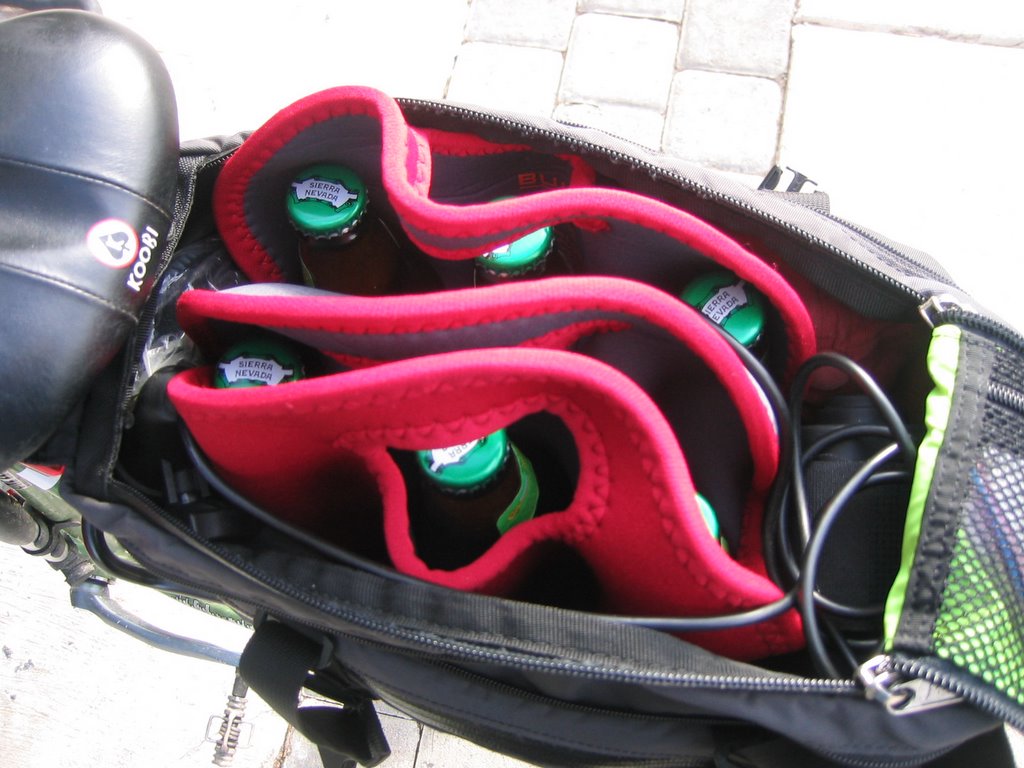
Ordered a Salsa Delgado rim and some DT Swiss spokes a while back from the shop, and Mike had shot me an email the previous Friday to let me know they were in. On Wednesday, I hit the WholeFoods in Vienna to pick up a little liquid thank-you for the hookup, placed it in my new neoprene six-pack tote (keeps 'em cold and cushioned), loaded that in my trunk pack, and headed out on the W&OD Trail to Ashburn.

The ride out went quickly, the trail surface devoid of any vestiges of the ice sheets that had coated parts of it recently. I got to the shop, dropped off the six, hung out a bit shooting the proverbial breeze with Mike, picked up my rim and spokes, zip-tied the rim to my rack, and headed back. Nice ride, lots of folks out taking advantage of the relatively mild weather and probably hoping to burn off some holiday poundage. About midway back, the irony of actually driving the meager 34 miles round trip to pick up, of all things, a bicycle rim, struck me and I had to smile. Made it home with a couple hours of daylight left and the following evening, I gathered together the parts and tools and popped the top off a 'Hop' Wallop.

It had been a while since I built a wheel, and yet this one came together the quickest and with the least amount of tinkering for the necessary tension and trueness. Props go out again to Jobst Brandt for his excellent, no-nonsense wheel-building book (I suggest you pick up a copy of your own if you're interested in this most meditative of bike-related undertakings, assuming Satan Claws didn't see fit to leave you with a copy over the holidays).

I've been running the 29er Delgados on my Karate Monkey, and even though they were originally designed as a cross rim, they've held up well and stayed true, so we'll see how well their little brother does saddled up with the big meat. I'm a fan of Sun rims, but this baby seems very well-made and is nicely machined to the point where I can't detect by sight or touch the seam in the sidewall where the hoop ends were joined. NIce!

It's a new year. Get out and ride more!